publications
* denotes equal contribution
2026
-
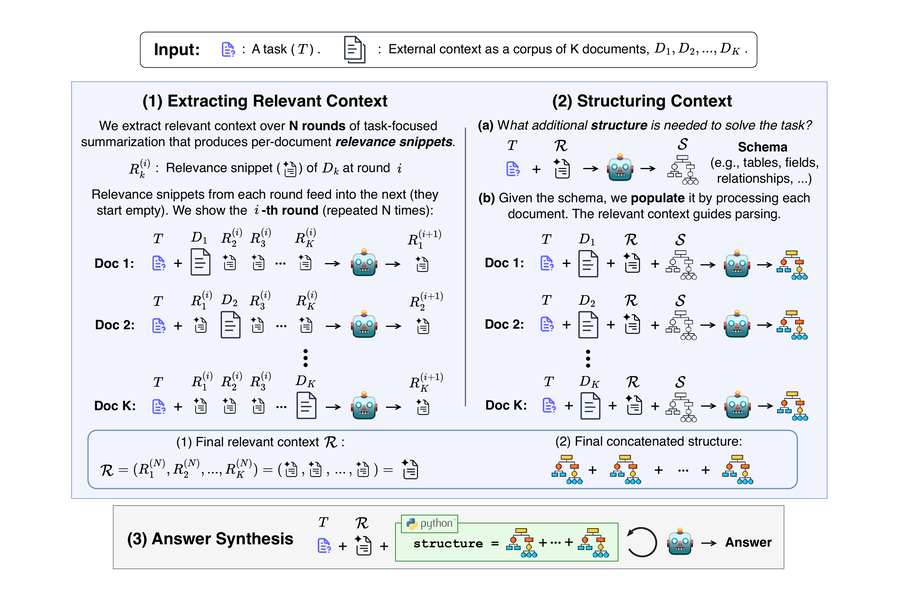 Realize What Matters: Principled Context Representation for Large-Scale ReasoningMichael Theologitis*, Dean Light*, Shuyue Stella Li, Benjamin Newman, Yulia Tsvetkov, and Dan SuciuPreprint (Sept 2026)
Solving complex tasks in domains such as science, medicine, law, and finance often requires assembling interdependent information scattered across vast, heterogeneous sources far beyond model context limits. Existing approaches tackle this challenge by organizing information into more manageable representations over which models can reason, such as graphs, textual memories, and retrieval collections. These representations dictate what downstream reasoning is possible and, ultimately, whether it succeeds; yet their design and construction remain largely ad hoc. In this work, drawing on the cognitive theory of relevance realization, we propose concrete principles for designing AI systems that construct effective representations of very large contexts. We analyze existing approaches and show how their successes and failures map onto their alignment with these principles, and introduce R3Con, a harness designed to operationalize the principles more systematically. We evaluate R3Con against nine state-of-the-art baselines on two recent benchmarks of reasoning over large document corpora. On these benchmarks, R3Con substantially outperforms the strongest baseline, by 20 and 8.4 percentage points. It also enables smaller models to outperform much larger ones: R3Con with 4B and 9B models outperforms all evaluated 35B baselines, while R3Con with a 35B-A3B model outperforms Claude Code with Claude-Sonnet-5 at 3.7× lower cost. Our results show that context representations following our principled approach can reduce reliance on model scale, pointing toward a future of AI systems with frontier-level performance powered by smaller models.
-
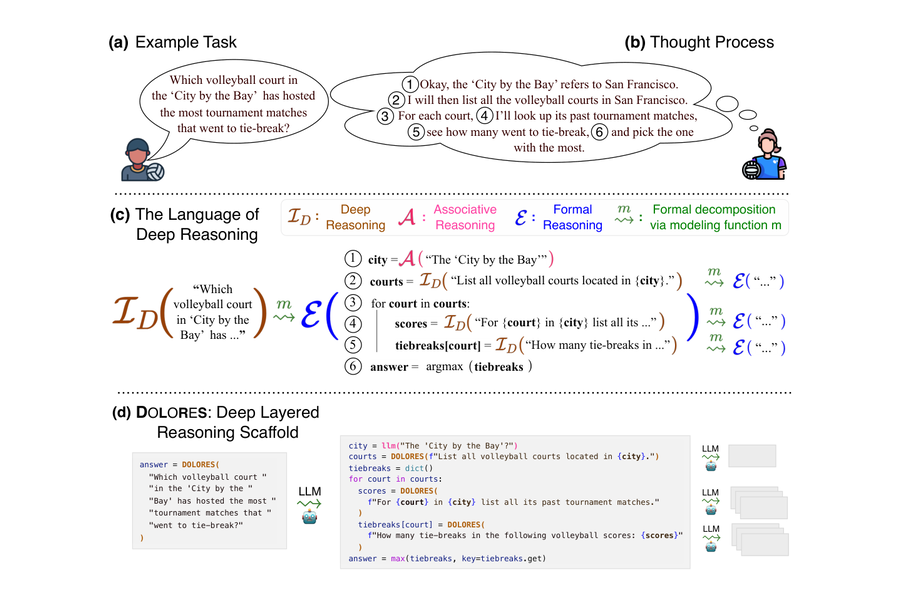 Deep Reasoning in General Purpose Agents via Structured Meta-CognitionDean Light*, Michael Theologitis*, Kshitish Ghate*, Shuyue Stella Li, Benjamin Newman, Chirag Shah, Aylin Caliskan, Pang Wei Koh, Dan Suciu, and Yulia TsvetkovNeurIPS 2026
Humans intuitively solve complex problems by flexibly shifting among reasoning modes: they plan, execute, revise intermediate goals, resolve ambiguity through associative judgment, and apply formal procedures to well-specified subproblems. Current LLM agents lack this flexibility, as their scaffolds hard-code such reasoning decisions in advance. These scaffolds are effective when their prescribed structure matches the task, but brittle when solving the task requires adapting the structure of reasoning itself. We introduce Deep Reasoning – an inference-time approach for constructing task-specific scaffolds through structured meta-reasoning. Deep Reasoning uses a formal language that represents meta-reasoning as executable decompositions over associative inference, formal computation, and recursive subproblem solving, enabling decomposition principles to be encoded as in-context examples that guide test-time scaffold construction. We instantiate this approach in a general-purpose agent (DOLORES) that distributes complex tasks across more controlled reasoning threads. We evaluate it against state-of-the-art scaffolding methods across four hard benchmarks: multi-hop reasoning, long-chain question answering, long-context aggregation, and deep research-style information seeking. DOLORES outperforms all evaluated scaffolds across three model sizes and two model families, improving over the strongest evaluated scaffold baseline by 24.8% on average. DOLORES distributes cognition across structured, lower-load reasoning threads, thereby reducing premature termination and hallucinations. This advantage can even bridge the scaling gap, with an 8B version surpassing all evaluated 32B baselines from the same family in more than half the settings. These results point toward future agentic systems that treat scaffolding as adaptive reasoning, constructing the structure each task requires just-in-time.
-
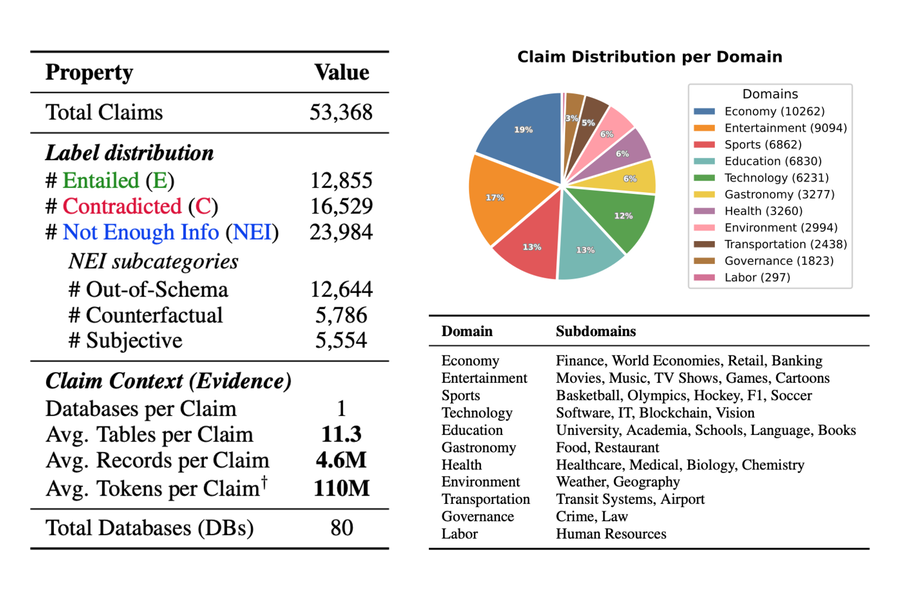 ClaimDB: A Fact Verification Benchmark over Large Structured DataMichael Theologitis, Preetam Prabhu Srikar Dammu, Chirag Shah, and Dan SuciuACL 2026
Real-world fact-checking often involves verifying claims grounded in structured data at scale. Despite substantial progress in fact-verification benchmarks, this setting remains largely underexplored. In this work, we introduce ClaimDB, a fact-verification benchmark where the evidence for claims is derived from compositions of millions of records and multiple tables. ClaimDB consists of 80 unique real-life databases covering a wide range of domains, from governance and healthcare to media, education and the natural sciences. At this scale, verification approaches that rely on "reading" the evidence break down, forcing a timely shift toward reasoning in executable programs. We conduct extensive experiments with 30 state-of-the-art proprietary and open-source (below 70B) LLMs and find that more than half score below 55% accuracy. Our analysis also reveals that both closed- and open-source models struggle with abstention – the ability to admit that there is no evidence to decide – raising doubts about their reliability in high-stakes data analysis tasks. We release the benchmark, code, and the LLM leaderboard at https://claimdb.github.io .
2025
-
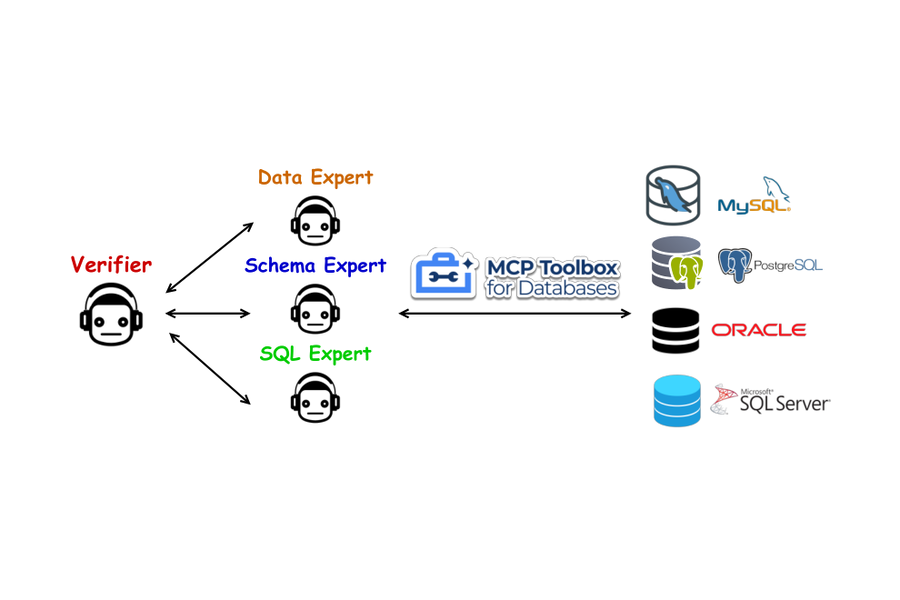 Thucy: An LLM-based Multi-Agent System for Claim Verification across Relational DatabasesMichael Theologitis and Dan SuciuLaMAS @ AAAI 2026 (Oral)
In today’s age, it is becoming increasingly difficult to decipher truth from lies. Every day, politicians, media outlets, and public figures make conflicting claims – often about topics that can, in principle, be verified against structured data. For instance, statements about crime rates, economic growth or healthcare can all be verified against official public records and structured datasets. Building a system that can automatically do that would have sounded like science fiction just a few years ago. Yet, with the extraordinary progress in LLMs and agentic AI, this is now within reach. Still, there remains a striking gap between what is technically possible and what is being demonstrated by recent work. Most existing verification systems operate only on small, single-table databases – typically a few hundred rows – that conveniently fit within an LLM’s context window. In this paper we report our progress on Thucy, the first cross-database, cross-table multi-agent claim verification system that also provides concrete evidence for each verification verdict. Thucy remains completely agnostic to the underlying data sources before deployment and must therefore autonomously discover, inspect, and reason over all available relational databases to verify claims. Importantly, Thucy also reports the exact SQL queries that support its verdict (whether the claim is accurate or not) offering full transparency to expert users familiar with SQL. When evaluated on the TabFact dataset – the standard benchmark for fact verification over structured data – Thucy surpasses the previous state of the art by 5.6 percentage points in accuracy (94.3% vs. 88.7%).
-
 FDA-Opt: Communication-Efficient Federated Fine-Tuning of Language ModelsMichael Theologitis, Vasilis Samoladas, and Antonios DeligiannakisCIKM 2026
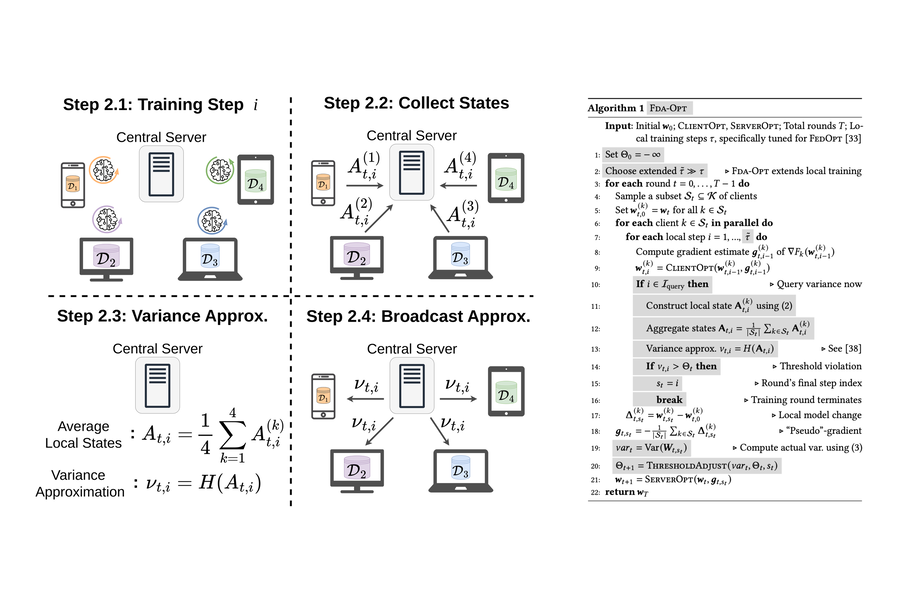
Federated Learning (FL) enables the utilization of vast, previously inaccessible data sources. At the same time, pre-trained Language Models (LMs) have taken the world by storm and for good reason. They exhibit remarkable emergent abilities and are readily adapted to downstream tasks. This opens one of the most exciting frontiers in FL: fine-tuning LMs. Yet, a persistent challenge in FL is the frequent, rigid communication of parameters – a problem magnified by the sheer size of these contemporary models. The FedOpt family of algorithms has become the go-to approach for FL, relying on fixed but arbitrary intervals for model exchanges. Recently, the FDA algorithm prescribed a dynamic approach by monitoring the training progress. However, it introduced a hard-to-calibrate parameter and imposed a rigid synchronization scheme. In this work, we address these limitations by proposing the FDA-Opt family of algorithms – a unified generalization of both FDA and FedOpt. Our experimental evaluation focuses on fine-tuning LMs on downstream NLP tasks and demonstrates that FDA-Opt outperforms FedOpt even when it is configured with hyper-parameters specifically optimized for the latter. In other words, we show that FDA-Opt is a practical, drop-in replacement for FedOpt in modern FL libraries and systems: it requires no additional configuration and delivers superior performance out of the box.
-
 Communication-Efficient Distributed Deep Learning via Federated Dynamic AveragingMichail Theologitis, Georgios Frangias, Georgios Anestis, Vasilis Samoladas, and Antonios DeligiannakisEDBT 2025
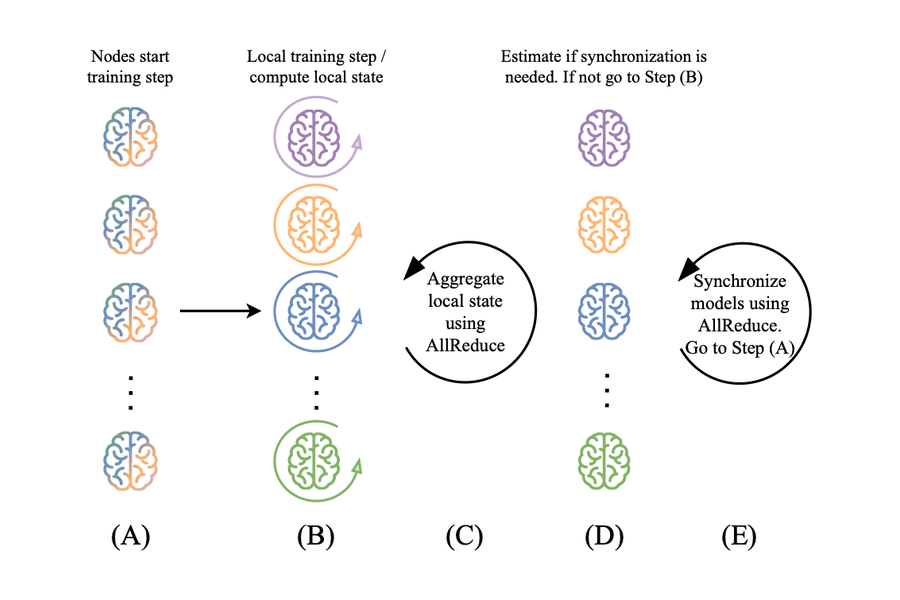
The ever-growing volume and decentralized nature of data, coupled with the need to harness it and extract knowledge, have led to the extensive use of distributed deep learning (DDL) techniques for training. These techniques rely on local training performed at distributed nodes using locally collected data, followed by a periodic synchronization process that combines these models to create a unified global model. However, the frequent synchronization of deep learning models, encompassing millions to many billions of parameters, creates a communication bottleneck, severely hindering scalability. Worse yet, DDL algorithms typically waste valuable bandwidth and render themselves less practical in bandwidth-constrained federated settings by relying on overly simplistic, periodic, and rigid synchronization schedules. These inefficiencies make the training process increasingly impractical as they demand excessive time for data communication. To address these shortcomings, we propose Federated Dynamic Averaging (FDA), a communication-efficient DDL strategy that dynamically triggers synchronization based on the value of the model variance. In essence, the costly synchronization step is triggered only if the local models – initialized from a common global model after each synchronization – have significantly diverged. This decision is facilitated by the transmission of a small local state from each distributed node. Through extensive experiments across a wide range of learning tasks we demonstrate that FDA reduces communication cost by orders of magnitude, compared to both traditional and cutting-edge communication-efficient algorithms. Additionally, we show that FDA maintains robust performance across diverse data heterogeneity settings.